As men, we long to be known for our strength, or ruggedness. If we are not particularly strong, we may have shifted that to a desire to be known for our intellect or creativity. Either way, what each of us want, is supremacy. We want to be the best. We want to be the smartest. In fact, we often lie to ourselves very subtly, to tell ourselves that we are the best and most important person in the room. Even those who may take up the mantle to fight for the downtrodden seem to share this character trait. You see it from the Twitter feed of “social justice warriors” and even the old men swapping fish stories at the corner store over coffee. It’s human nature to put ourselves at the center of our own world.
A gentlemen shows a great that butts against this. Courtesy. Kindness.
To put someone else’s needs ahead of our own clashes with our own inner beast. And it often inspires the same response in others!
Let me challenge you directly, men. There are others who are smarter and stronger. And even those who are weaker and not as smart that need you to defer to them sometimes. They need you to step up and show kindness, politeness.
There are people that just need a smile, a laugh, a friend.
They might need you to offer a helping hand, or even make a sacrifice to help meet a bigger need.
I believe showing kindness goes against human nature, which is about self. Kindness though is built in is too… it’s built in because we are made in the image of God. Let us never forget the kindness others have shown us, and let us live indebted to pay it forward in acts of love and service
Maybe it’s because chivalry and chauvinism both involve men and how they view women…. Maybe it’s because they both start with “ch”… But the meaning of chivalry is often mixed with chauvinism.
chiv·al·ry ˈSHivəlrē/Submit noun the medieval knightly system with its religious, moral, and social code. historical knights, noblemen, and horsemen collectively. “I fought against the cream of French chivalry” the combination of qualities expected of an ideal knight, especially courage, honor, courtesy, justice, and a readiness to help the weak. synonyms:knight errantry, courtly manners, knightliness, courtliness, nobility; bravery, courage, boldness, valor, heroism, daring, intrepidity; bushido “the values of chivalry”
chau·vin·ism ˈSHōvəˌnizəm/Submit noun exaggerated or aggressive patriotism. “public opinion was easily moved to chauvinism and nationalism” synonyms:jingoism, excessive patriotism, blind patriotism, excessive nationalism, sectarianism, isolationism, flag-waving; More excessive or prejudiced loyalty or support for one’s own cause, group, or gender. plural noun: chauvinisms “a bastion of male chauvinism” synonyms:jingoism, excessive patriotism, blind patriotism, excessive nationalism, sectarianism, isolationism, flag-waving; xenophobia, racism, ethnocentrism, ethnocentricity; partisanship, partiality, prejudice, bias, discrimination, bigotry; male chauvinism, antifeminism, misogyny, sexism “they have a tendency toward small-mindedness and chauvinism”
I don’t know if anyone even realizes they have connected the two words. I think it happened unconsciously somewhere around the time of the cultural revolution of the 60s.
I’ll be clear… that revolution for some very good things for women. There were many ridiculous ideas about women and their worth. Truly “male chauvinistic” ideas.
To be a gentleman is to value things rightly. To honor and respect women.
That sounds like chivalry to me.
Offering to hold the door for a woman didn’t mean we think she is weak. It means we want to show her honor.
It is polite to hold the door open for people, right?
Gentlemen show manners not just because of social norms or old fashioned rules… rather, that politeness comes out of a drive to honor people, to value people. I can’t say that it will be ready to separate the cultural associations between chauvinism and chivalry, but we should strive to model that we are men of honor.
As I pursue personal development and helping other men with their personal development, I like to read books, and often excerpts of books. I recently read a really interesting excerpt and “cliff notes” of a book called “Leadership and Self-deception.”
It’s a really challenging premise…. That YOU (or “I”) have a problem that is keeping us from leading well, or succeeding. The biggest part of that problem is that we can’t see it. We have convinced ourselves that we don’t HAVE a problem. That other people are the problem. We have convinced ourselves that we are doing well, when sometimes, often, we are not performing anywhere NEAR our potential. The book contends that while many problems we might be able to self identify… Self deception keeps us from really seeing many of our issues clearly. I think the solution is to make sure there are people in your life that you trust that can challenge you, ask you the hard questions, and tell you the truth. A good friend, mentor or leader can do it in a way that doesn’t heap shame, but rather brings the encouragement to change and grow. Unfortunately, these are often the people that we avoid. No one wants to hear they are failing. No one wants to be called out. No one likes hearing about their failures, or being told the things they believe about themselves is a lie.
I’m here to tell you, there are times in my life that I have listened to those friends and mentors, saw my flaws and dealt with them. There are also times I pushed people away or isolated myself and didn’t listen to feedback from others.
I know that the end result of listening to others was growth in my life. It transformed the way I think and the way I performed.
I know that isolation only amplified my problems. In fact, in those times that I have been separate from those relationships, these are the times that I’ve had the worst failures in my life.
Wherever you find yourself, in failure or success, we are equally in need of honest feedback. You may find you aren’t doing as well as you think you are, or find more ways to make things better.
But as long as we build up our tolerance to our own baloney, we well be oblivious to the places we need to improve.
Dave Ramsey talks about getting out of debt by selling everything that isn’t nailed down. Debt might not be your rationale about making more money, but there are certainly ways you could turn the junk sitting around your house into extra cash. 1. Facebook – Sell in local garage sale groups / Facebook Marketplace 2. Online Selling Apps – there are a number of apps for selling. Letgo, VarageSale, and more.
Craigslist or other local classified sites
Ebay / Amazon – This takes a little more skill, but you can make money selling your junk on these sites.
This doesn’t include an old fashioned garage sale. Just put it out on a table and toss a price sticker on it. If it is sitting around unused, why not liquidate it, and put that cash back into what you need?
In the old days, one average salary could feed, shelter, clothe, and entertain a family. Today though, inflation, corruption, and financial mismanagement have put us in a position where we often find ourselves in pursuit of more “hustle” to make ends meet. Many families have two or three jobs just to cover basic expenses. I’m no financial guru, and while my own income streams are still growing, I have studied and researched much about how to create a side hustle to make residual passive income.
What is passive income? Passive income comes from royalties, rents, dividends, or residuals. You work up front or invest, and over time, your investment pays you back. Investopedia says: Earnings an individual derives from a rental property, limited partnership or other enterprise in which he or she is not materially involved. As with non-passive income, passive income is usually taxable; however it is often treated differently by the Internal Revenue Service (IRS).
What would that passive income look like for you? 1. Rental properties – If you have some cash to invest in rental properties, and enough to keep up the properties, you can make enough to pay for your investment, and then make a profit. 2. Royalties – If you write a book, record music, and sell it, either through self-publishing, or a publisher or record label – you can collect income each month from that source. 3. Investments – investing cash in a mutual fund, or even riskier stocks can bring you dividends each month.
Online business – this could be many things. Often, people create products to sell – they could be real tangible items, virtual courses, subscription services, or more.
Passive income is not free and easy money – it does take work, time, and investment to build these sources – but they can pay off later with minimal maintenance, if done well. Ultimately, my goal is to generate a full time income from passive income. I’d like to be able to “retire” from working to build someone else’s dream, and work 100 percent building my own. I’m not there yet, but we’re headed there! I highly recommend following Pat Flynn at Smart Passive income for some ideas on how to make it happen for you!
Use your words. Say what you think and feel about her. I don’t know why this is so difficult for many men to do – but it’s essential to building a good relationship. She needs to hear, “Thank you.” How often? You can never say it enough. She needs to hear, “You are beautiful.” How often? You can never say it enough. There are many things unique to your wife that she needs to hear, and I’ll leave that up to you to decode and decipher her. But I can tell you that almost every woman I’ve ever met struggles with self-image, self-worth, self-doubt issues. I think it’s safe to say that it’s a common thing women struggle with. As a husband, your responsibility is to build her up. To affirm her. To use your words to reassure, comfort, and back her up. I would talk about the negative things we say – when we cut down, criticize, and tear her apart with our comments – but honestly, that’s another discussion entirely. All that I will say is to stop. If you have constructive advice or concerns – you need to wrap that in love. For every legitimate criticism, you should have already given her five to ten compliments.
This, is perhaps the hardest part of love. Men, we see ourselves as leaders. (Which isn’t a bad thing. We’ll get to leadership, and what that means in a minute.) We see ourselves as lovers, we see ourselves in so many ways, but picturing ourselves as servants is so difficult. The truth? No matter where you are in live, you’re a servant to someone. To quote, Bob Dylan, “You’re gonna have to serve somebody. It may be the Devil, it may be the Lord, but you’re gonna have to serve somebody.” In the case of marriage, you’re either serving yourself, or you are serving her. Are you helping her with chores around the house? Are you providing for her needs? Are you doing things that help her? Are you making sure to please her first in the bedroom? (C’mon guys. You know that matters!) If you want a happy wife, you’ve got to take on the role of a servant. It will make you a great husband. A happy husband. And if you do it well, and if you do it right, she’ll reciprocate. Everybody can be great…because anybody can serve. You don’t have to have a college degree to serve. You don’t have to make your subject and verb agree to serve. You only need a heart full of grace. A soul generated by love. ― Martin Luther King Jr.
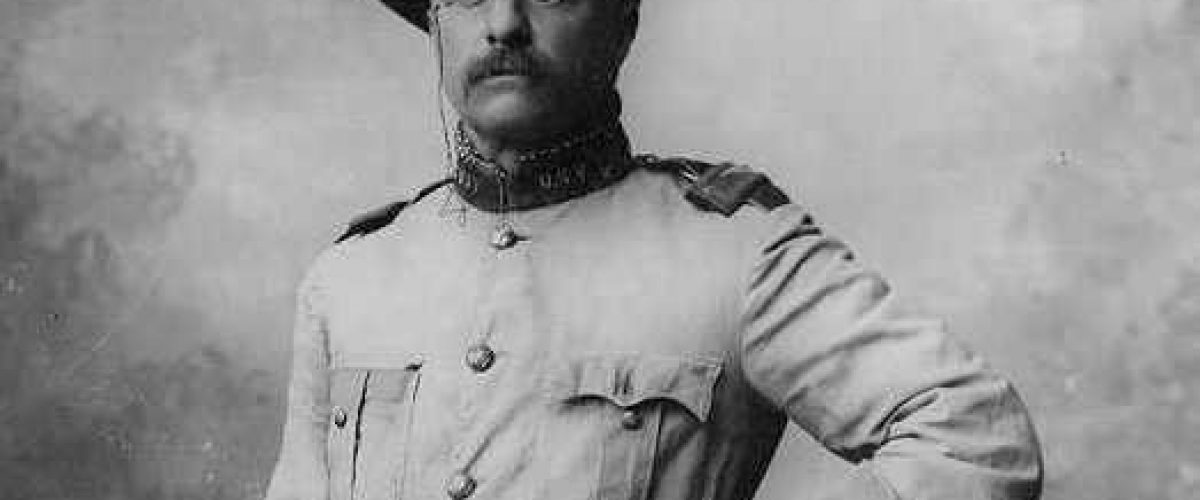
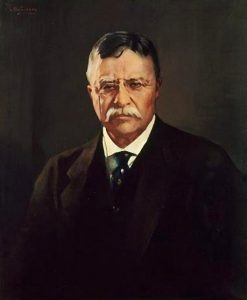
Teddy Roosevelt is a hero of mine for a number of reasons. He takes us back to a day when statesman could be strong and bull-headed and speak their minds, but they could do it with class. Teddy’s was born a city boy to a rich family, and yet he longed for the wilderness, and spent much time amidst the trees and fields and beasts. He was a soldier, a gentleman, and a fierce political contender. He is known as the founder of the Progressive movement – which today looks very little like the ideals which Roosevelt espoused. He believed that it was the duty of all americans to help create equality of opportunity for all. That meant opportunity to work hard to earn a living. I could rant about today’s incarnation of the progressive movement and the push for wealth redistribution, but that may be a post for another day. Today, I want to celebrate the virtue and the value of Theodore Roosevelt. Roosevelt is also known for being shot before delivering a speech, as a political candidate running for a third term (that was allowed, back then) and refused to cancel the event, delivering his speech with the bullet still in his chest. How manly can you get? Wikipedia has this to say: Theodore Roosevelt Jr. (/ˈroʊzəvɛlt/roh-zə-velt;[a] October 27, 1858 – January 6, 1919) was an American statesman, author, explorer, soldier, naturalist, and reformer who served as the 26th President of the United Statesfrom 1901 to 1909. As a leader of the Republican Party during this time, he became a driving force for the Progressive Era in the United States in the early 20th century.
Born a sickly child with debilitating asthma, Roosevelt successfully overcame his health problems by embracing a strenuous lifestyle. He integrated his exuberant personality, vast range of interests, and world-famous achievements into a “cowboy” persona defined by robust masculinity. Home-schooled, he began a lifelong naturalist avocation before attending Harvard College. His first of many books, The Naval War of 1812 (1882), established his reputation as both a learned historian and as a popular writer. Upon entering politics, he became the leader of the reform faction of Republicans in New York’s state legislature. Following the deaths of his wife and mother, he took time to grieve by escaping to the wilderness of the American West and operating a cattle ranch in the Dakotas for a time, before returning East to run unsuccessfully for Mayor of New York City in 1886. He served as Assistant Secretary of the Navy under William McKinley, resigning after one year to serve with the Rough Riders, where he gained national fame for courage during the Spanish–American War. Returning a war hero, he was elected governor of New York in 1898. The state party leadership distrusted him, so they took the lead in moving him to the prestigious but powerless role of vice president as McKinley’s running mate in the election of 1900. Roosevelt campaigned vigorously across the country, helping McKinley’s re-election in a landslide victory based on a platform of peace, prosperity, and conservatism.
Following the assassination of President McKinley in September 1901, Roosevelt succeeded to the office at age 42, becoming the youngest United States President in history. Leading his party and country into the Progressive Era, he championed his “Square Deal” domestic policies, promising the average citizen fairness, breaking of trusts, regulation of railroads, and pure food and drugs. Making conservation a top priority, he established a myriad of new national parks, forests, and monuments intended to preserve the nation’s natural resources. In foreign policy, he focused on Central America, where he began construction of the Panama Canal. He greatly expanded the United States Navy, and sent the Great White Fleet on a world tour to project the United States’ naval power around the globe. His successful efforts to end the Russo-Japanese War won him the 1906 Nobel Peace Prize.
Elected in 1904 to a full term, Roosevelt continued to promote progressive policies, but many of his efforts and much of his legislative agenda were eventually blocked in Congress. Roosevelt successfully groomed his close friend, William Howard Taft, to succeed him in the presidency. After leaving office, Roosevelt went on safari in Africa and toured Europe. Returning to the U.S., he became frustrated with Taft’s approach as his successor. He tried but failed to win the presidential nomination in 1912. Roosevelt founded his own party, the Progressive, so-called “Bull Moose” Party, and called for wide-ranging progressive reforms. The split among Republicans enabled the Democrats to win both the White House and a majority in the Congress in 1912. The Democrats in the South had also gained power by having disenfranchised most blacks (and Republicans) from the political system from 1890 to 1908, fatally weakening the Republican Party across the region, and creating a Solid South dominated by their party alone. Republicans aligned with Taft nationally would control the Republican Party for decades.
Frustrated at home, Roosevelt led a two-year expedition in the Amazon Basin, nearly dying of tropical disease. During World War I, he opposed President Woodrow Wilson for keeping the U.S. out of the war against Germany, and offered his military services, which were never summoned. Although planning to run again for president in 1920, Roosevelt suffered deteriorating health and died in early 1919. Roosevelt has consistently been ranked by scholars as one of the greatest U.S. presidents.[2] Historians admire Roosevelt for rooting out corruption in his administration, but are critical of his 1909 libel lawsuits against the World and the News. Large corporate funding to the Republicans in the 1904 election continued to be a source of controversy for Roosevelt during his second term of office and in his 1912 Republican presidential nomination bid. His face was carved into Mount Rushmore alongside those of George Washington, Thomas Jefferson, and Abraham Lincoln.
Check out these quotes from Theodore Roosevelt
“Nothing in this world is worth having or worth doing unless it means effort, pain, difficulty.”
“To sit home, read one’s favorite paper, and scoff at the misdeeds of the men who do things is easy, but it is markedly ineffective. It is what evil men count upon the good men’s doing.”
“A soft, easy life is not worth living, if it impairs the fibre of brain and heart and muscle. We must dare to be great; and we must realize that greatness is the fruit of toil and sacrifice and high courage… For us is the life of action, of strenuous performance of duty; let us live in the harness, striving mightily; let us rather run the risk of wearing out than rusting out.”
“I don’t pity any man who does hard work worth doing. I admire him. I pity the creature who does not work, at whichever end of the social scale he may regard himself as being.”
“We must show, not merely in great crises, but in the everyday affairs of life, the qualities of practical intelligence, of courage, of hardihood, and endurance, and above all the power of devotion to a lofty ideal, which made great the men who founded this Republic in the days of Washington, which made great the men who preserved this Republic in the days of Abraham Lincoln.”
“Unless a man is master of his soul, all other kinds of mastery amount to little.”
Every Monday At Manlihood.com – we celebrate men of courage, valor, creativity, innovation, and honor. We celebrate men who have accomplished great things, that have set good examples, and then have made the world a better place. This is #mancrushmonday
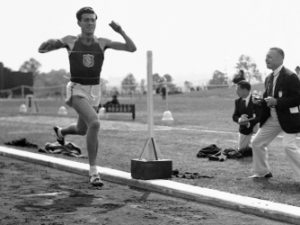
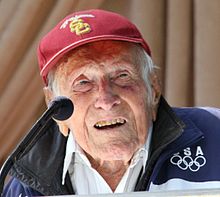
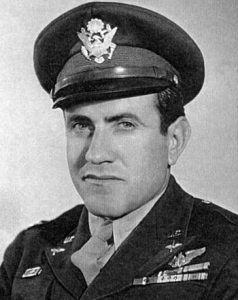
Louis Zamperini is truly an American hero, and we at Manlihood proudly salute him as this week’s Man Crush Monday! From Wikipedia: Louis Silvie “Louie” Zamperini (January 26, 1917 – July 2, 2014) was a US prisoner of war survivor in World War II, a Christian evangelist and an Olympic distance runner.
Zamperini took up running in high school and qualified for the US in the 5000m race for the 1936 Berlin Olympics. He finished 8th in the event. In 1941 he was commissioned into the United States Army Air Forces as a Lieutenant. He served as a bombardier in B-24 Liberators in the Pacific. On a search and rescue mission, mechanical difficulties forced Zamperini’s plane to crash in the ocean. After drifting at sea for 47 days, he landed on the Japanese occupied Marshall Islands and was captured. He was taken to a prison camp in Japan where he was tortured. Following the war he initially struggled to overcome his ordeal. Later he became a Christian Evangelist with a strong belief in forgiveness. Zamperini is the subject of two biographical films, the 2014 Unbroken and the 2015 Captured by Grace.
— The movie Unbroken only shares a tiny bit of his story – but it’s still a great place to start learning about this courageous hero!
Check out these inspiring quotes from Louis Zamperini:
“The one who forgives never brings up the past to that person’s face. When you forgive, it’s like it never happened. True forgiveness is complete and total.”
― Louis Zamperini, Devil at My Heels
“I’d made it this far and refused to give up because all my life I had always finished the race.”
― Louis Zamperini, Devil at My Heels
“One moment of pain is worth a lifetime of glory.”
― Louis Zamperini
“Yet a part of you still believes you can fight and survive no matter what your mind knows. It’s not so strange. Where there’s still life, there’s still hope. What happens is up to God.”
― Louis Zamperini, Devil at My Heels
“All I want to tell young people is that you’re not going to be anything in life unless you learn to commit to a goal. You have to reach deep within yourself to see if you are willing to make the sacrifices.”
― Louis Zamperini, Devil at My Heels
“Someone who doesn’t make the (Olympic) team might weep and collapse. In my day no one fell on the track and cried like a baby. We lost gracefully. And when someone won, he didn’t act like he’d just become king of the world, either. Athletes in my day were simply humble in our victory.
I believe we were more mature then…Maybe it’s because the media puts so much pressure on athletes; maybe it’s also the money. In my day we competed for the love of the sport…In my day we patted the guy who beat us on the back, wished him well, and that was it.”
― Louis Zamperini, Devil at My Heels
“I think the hardest thing in life is to forgive. Hate is self destructive. If you hate somebody, you’re not hurting the person you hate, you’re hurting yourself. It’s a healing, actually, it’s a real healing…forgiveness.”
― Louis Zamperini
“People tell me, “You’re such an optimist”. Am I an optimist? An optimist says the glass is half full. A pessimist says the glass is half empty. A survivalist is practical. He says, “Call it what you want, but just fill the glass.” I believe in filling the glass.”
― Louis Zamperini
“The great commandment is that we preach the gospel to every creature, but neither God nor the Bible says anything about forcing it down people’s throats.”
― Louis Zamperini, Devil at My Heels
“You only have one life. You should never be too busy to save it.”
― Louis Zamperini, Don’t Give Up, Don’t Give In: Lessons from an Extraordinary Life
“don’t be afraid to make mistakes; they are just the stepping-stones to success.”
― Louis Zamperini, Don’t Give Up, Don’t Give In: Lessons from an Extraordinary Life
“I was raised to face any challenge.”
― Louis Zamperini, Devil at My Heels
“The world, we’d discovered, doesn’t love you like your family loves you.”
― Louis Zamperini, Devil at My Heels
“To live, a man needs food, water, and a sharp mind.”
― Louis Zamperini, Devil at My Heels
“(after asking Christ into his heart) I waited. And then, true to His promise, He came into my heart and my life. The moment was more than remarkable; it was the most realistic experience I’d ever had. I’m not sure what I expected; perhaps my life or my sins or a great white light would flash before my eyes; perhaps I’d feel a shock like being hit by a bolt of lightning. Instead, I felt no tremendous sensation, just a weightlessness and an enveloping calm that let me know that Christ had come into my heart.”
― Louis Zamperini, Devil at My Heels
Get the new ebook from Josh Hatcher on Amazon HERE.
Josh’s book explores the 12 pillars of masculinity as he sees them, with wit, humility, and challenging insights.
See what others are saying!
“This excellent author has provided this book for the reading of us all, but primarily for men to read. From teenagers to older men, single or married, the 12 pillars are helpful guidelines containing powerful words to encourage growth. Josh Hatcher offers great advice and encouragement. Recent graduates, a new groom, a man recovering from poor choices or addiction, ANY man, would benefit from Manlihood: The 12 Pillars of Masculinity.”
“In this book, Joshua Hatcher explores manhood in its purest sense and helps his readers discover what it truly means to be a man in today’s society. Though geared toward men, women can benefit greatly from Mr. Hatcher’s book as well, as it will help them to not only recognize true men and raise them one day, but apply these things to their own lives. Josh combines timeless wisdom with smart social commentary and fresh takes on old ideas, creating this inspiring and exciting masterpiece. I highly recommend reading this book, no matter your age, gender, social standing–whatever the case may be–as it will revolutionize your ideas of manhood and possibly even what it means to be an ethical and wise human being.”
“This is a phenomenal book. Josh Hatcher lays it all out about what it means to be a man and the action steps you should take to be the best man you are capable of. It is just great. I will be reading it a few more times at least. Whether you are a young boy looking for guidance or a grown man wanting to improve as a man, this book is for you. It was very well written and is a wealth of information.”
“You would think this content is common sense, but sadly in this day and age, it is not. I want to personally thank this author for his calling to help males become the men they are supposed to be. Very concise and easy to read, this is important to me. Two thumbs up!”
“Filled with timeless truths not only for men, young and old, but for everyone desiring to grow as a person. Josh has presented principles of manhood in an accessible way that can be a great outline for mentoring and personal growth.”