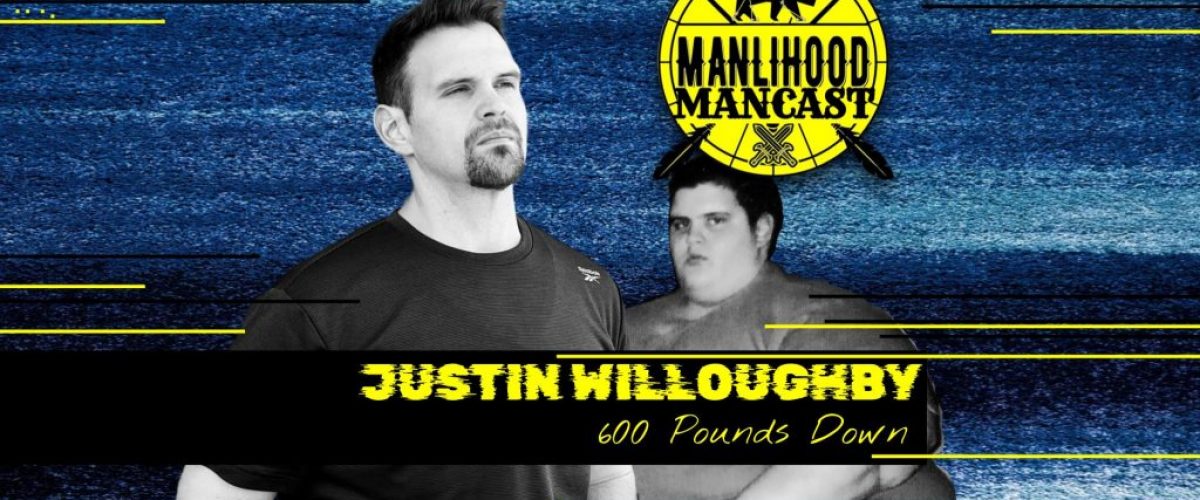
When he was 16 years old, Justin was given a death sentence by the doctors. He weighed 799 pounds. Crippled by anxiety, panic attacks, and an eating disorder, his body became his prison.
Listen to Justin Willoughby on the Manlihood ManCast on Spotify | Apple Podcasts | Youtube or wherever you listen to podcasts.
Set Goals. Do the Work. Change Your Life. WITH BROTHERS. – Join the Arrows and Iron Brotherhood – http://manlihood.com/brotherhood
One Step
Justin’s first workout was one step. The next day, it was two. Eventually, those steps would become a milestone that changed his life forever.
600 Pounds Down
Over the next several years, Justin lost 600 pounds without weight loss drugs or surgery, and now he has dedicated his life to helping others get fit, and live a life free from obesity.
Do you have testicular fortitude? Do you want to embrace your life of courage? Join our elite group of powerhouse men who are changing the world. Manlihood.com/brotherhood
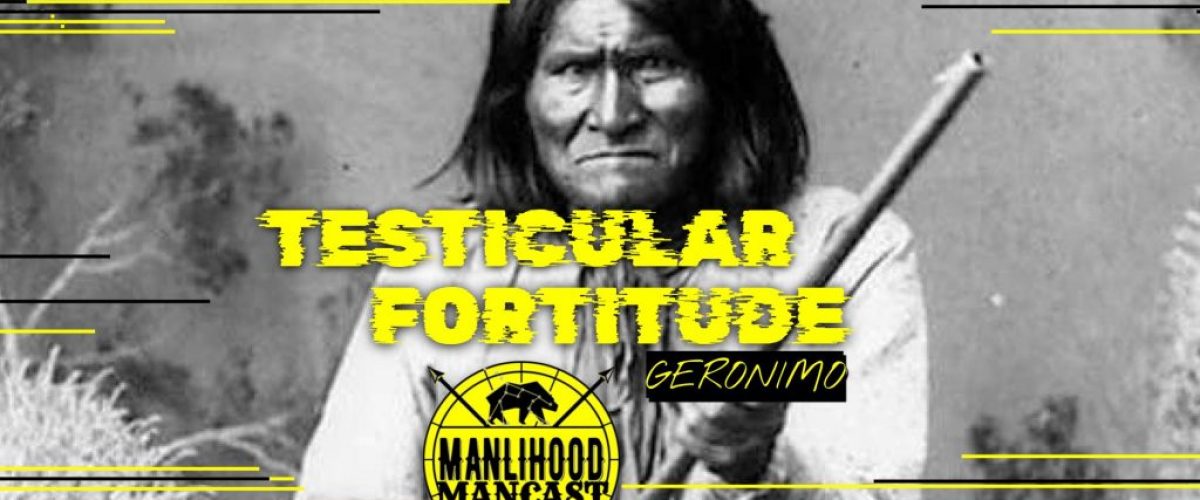
Geronimo
In World War II, paratroopers would yell “Geronimo!” as they jumped out airplanes into battle. Growing up on Looney Tunes, I heard the shouting of that name many times over the years, and associated it with bravery and courage.
But who was Geronimo?
By all accounts in his day, he would have been seen as an outlaw. A rogue Apache on the run from the US Government. But his story is one of a man with an unquenchable fire to fight for freedom for his people.
He was born in 1829 in what would eventually become Arizona. His actual name, Goyahkla, means “one who yawns.”
He lived among the Chiricahua tribe of Apaches, and as he came of age, his people were at war with the Mexicans in the South and the US government to the North, as well as a constant war with the Comanche and Navajo.
In 1851, a group of Mexican soldiers led by Colonel Jose Maria Carrasco attacked his family camp while he was away, killing his wife, his mother, and his three children.
A voice in the wind
As was custom, he burned his family’s belongings and headed into the forest to grieve. Goyahkla said he heard a voice in the wilderness that told him, “No bullet will ever hurt you. I will guide your arrows.”
Imbued with courage from this prophecy, He declared his own war, and stalked and killed the soldiers that murdered his family.
Historians aren’t sure where the name Geronimo appeared. It could be a mispronouncing of his name, or could be associated with the sound of Mexican soldiers crying out to Saint Jerome as they were being killed by the vengeful warrior – but somehow, the name Geronimo stuck in the cultural consciousness.
Eventually, Mexico lost its war with the US, and lost claims to Arizona as well. The US Westward expansion means that the land inhabited by the natives is considered property of the United States. Tension and skirmishes arise as the US attempts to relocate the apaches. In 1872, the Chiricahua were given a reservation which included some of their original lands, but they were later relocated to live with other Apaches at the San Carlos Reservation in Arizona.
Jailbreak
Geronimo broke out of that reservation three separate times, and he would evade capture for long periods of time each time.
He believed bullets couldn’t kill him. He wasn’t afraid of the soldiers or the bounty hunters or anyone else who tried to force him to leave his homelands and live on the reservation.
His story got picked up by the sensational newspapers of the day, and he became an anti-hero – a symbol of courage as he bucked the system. Certainly some considered a villain, but even they couldn’t deny his courage and perseverance.
In 1885, a 55 year old Geronimo escaped the reservation again with 135 Apache followers, raiding Mexican and American settlements, and killing civilians for almost a year. He was forced to surrender to the US Army, but yet again, Geronimo and several of his men escaped, drawing the ire and causing the embarrassment of the US Government.
The US Army sent 5,000 troops, along with 3,000 Mexican troops to capture Geronimo and his men. Their knowledge of the hill country allowed them to evade capture for 5 months.
Surrender
In 1886, Geronimo turned himself in at Skeleton Canyon.
He was eventually imprisoned at Fort Sill at the Commanche and Kiowa reservation in what is now Oklahoma.
He spent the last 14 years of his life at Fort Sill, with occasional government approved trips to attend Wild West Shows, where he was shown off – his reputation as an unbeatable rebel, now compliant, made him quite a draw for crowds.
Geronimo and Teddy Roosevelt
Geronimo was even invited to attend the inauguration of Teddy Roosevelt. Geronimo along with several other chiefs were paraded in full headgear and war paint in attempt to show that they had “buried the hatchet forever.”
The New York Tribune tells the story of Geronimo’s meeting with Roosevelt. “Take the ropes from our hands,” Geronimo asked the President, with tears “running down his bullet-scarred cheeks.”
Roosevelt told Geronimo that the Indian had a “bad heart.” “You killed many of my people; you burned villages…and were not good Indians.” Roosevelt told him he would have to “wait and see” how well the Indians would “behave” on the reservation.
The meeting was quickly adjourned and Geronimo was shuffled back to the reservation in Oklahoma, where he died in 1909.
Geronimo’s fight for freedom ended in captivity and disappointment– despite converting to Christianity in an attempt to show Roosevelt that he could be a “good Indian” – he was still denied the only request he ever longed for.
His story resonated for generations… a rebel, refusing to capitulate, surviving against all odds with a heart that beat for his homeland and his people. And THAT is why Geronimo had Testicular Fortitude.
Many years ago, I wrote this song as a tribute to the veterans who served our country.
When this song was recorded at a live concert, our drummer was Chris Stavish, a Marine Corps Vet.
The song has a lot of meaning to me, as I’ve had many members of my family and many friends who served our country, and I just wanted to talk about their heroism, and their desire to come home to “American Sand”
American Sand
by Josh Hatcher
I’ve been fighting in this desert for way too long And I’m starting to feel forgotten but I know I got be strong Cuz I want to make it back home… back to my own land I wanna pick up a fistful of American Sand. When I get off that plane I’m gonna fall down and kiss the dirt Of this land that gave me freedom long before it gave me birth
I can’t wait to get back to American Sand I’m going home when this war is over to American Sand.
Back home I’ve got a family. A wife and a couple kids How I long to see their faces. To give my wife a kiss. Cuz everything I’ve got’s in a America and I ache to get it back This foreign soil is empty and hope is looking black This kid I’ve known since Basic just died the other day And just before it happened, I heard him say.
I can’t wait to get back to American Sand I’m going home when this war is over to American Sand.
Some say we should be here… fighting someone else’s war. And it’s their right to say it that I’m fighting for But all this bickering on the homefront over whether we are right Doesn’t help me at this moment. Doesn’t help me win this fight. I’ve seen things in battle that keep me up at night The only thing I hold on to – that gets me through the night Is American Sand —
I can’t wait to get back to American Sand I’m going home when this war is over to American Sand.
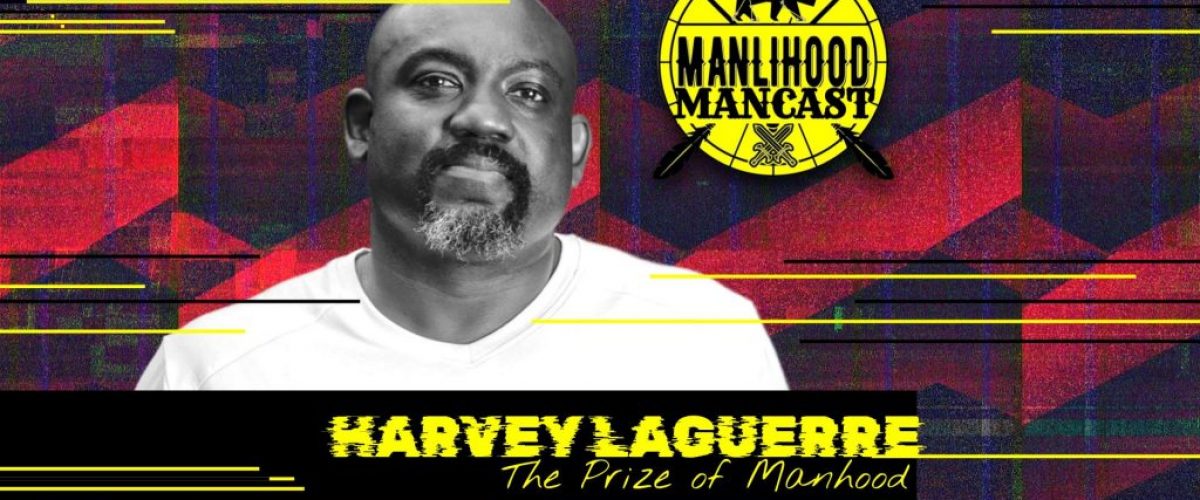
In this episode of the Manlihood ManCast, Josh Hatcher talks with Harvey Laguerre. Harvey is podcast, a baseball fan, but his primary role is that of a stay-at-home dad.
Josh and Harvey talk about a number of things, including the stigma of a man not pursuing a career in order to raise his family, Harvey’s perspective on the world as a black man, and a meaningful conversation that gets to the heart of what it means to be a man.
Harvey Laguerre is a 47 year old, stay-at-home dad of 4.
During the pandemic, Harvey started a marriage and relationship podcast with is wife called “Love is Black.” That podcast’s success emboldened Harvey to start a new podcast, specifically for men.
Men are the P.R.I.Z.E. podcast is the result of years of learning what it means to be a man in the world today.
Harvey says, “The definition of masculinity has changed drastically and not for the better. Attributes that were once manly, are now toxic. What has not changed is the lack of safe spaces for men to express their emotions. Being a vulnerable man is not celebrated like it should be. This podcast is that safe space for men to open up and reveal their inner monologue.”
The “Men Are The Prize” is a podcast for men to be open and vulnerable. Harvey uses PRIZE as an acronym, and that acronym directs his conversations with his guests.
Each letter represents a characteristic men need to succeed.
Norah Mirnerny: “For some, the deadly virus and its upheaval constituted the “first big thing they’d ever been through.” Meanwhile, McInerny and others whose lives had been shaped by grief, loss or tragedy had long known that “life is fragile and our pace in this modern world is untenable.”
Nora McInerny: I want my work to lower the bar for people. We have so much intense pressure to achieve and to perform in the face of all the suffering and struggle of modern life. You do not have to do anything other than just be a decent person and survive.
An Iranian hermit known as “the world’s dirtiest man” has died at the ripe age of 94, just months after taking his first wash in decades, Iranian state media announced.
“Amu Haji” – Uncle Haji – as he was referred to, died on Sunday in Dezhgah, a village in the country’s southern province of Fars, state news agency IRNA reported.
According to the region’s district head, Haji had for decades avoided fresh food and believed that “if he cleans himself, he will get sick,” the agency reported.
Sports Rivalry and Loyalty
The Fight Club panel also talks about sports, and the fan loyalty that turns into rivalry between friends and family.
Bullying
Bullying is also on the agenda, and the group discusses the way to end bullying.
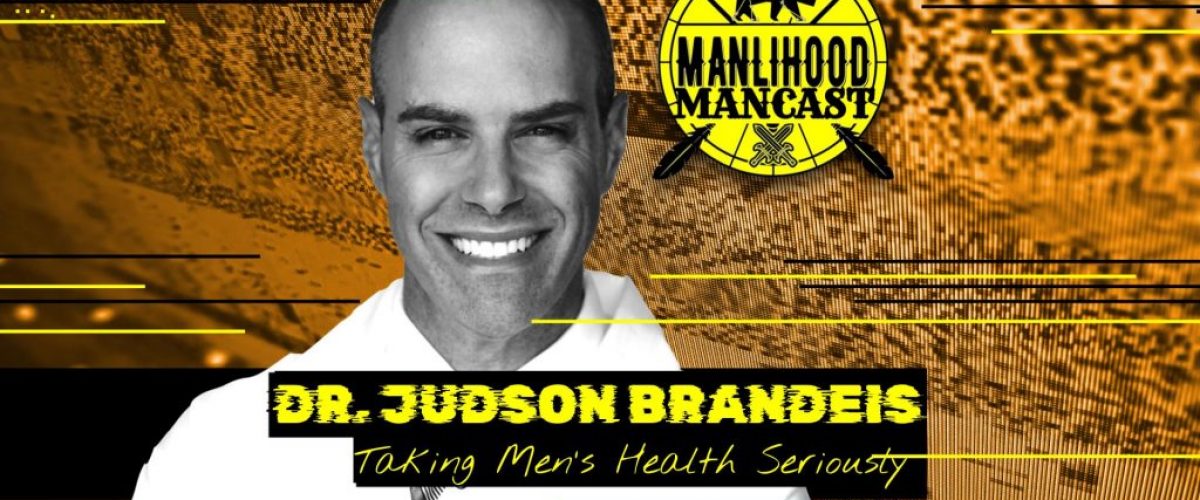
And today’s guest has 25 years of experience as a doctor helping with men’s issues. He’s performed thousands of surgeries and been a pioneer in surgical robotics.
Dr. Judson Brandeis is the guest on this episode of The Manlihood ManCast
Listen to Dr. Judson Brandeis on the Manlihood ManCast on Spotify | Apple Podcasts | Youtube or wherever you listen to podcasts.
We will have Dr. Judson Brandeis on the show again soon, as he has recently done some work on the cutting edge of men’s sexual health that we want to be able to share with you!
From 2014 to 2020, his colleagues voted him as a Top Urologist in the San Francisco Bay Area, and he serves as Chief of Urology at John Muir Hospital and Hill Physicians for several years.
He attended Brown University, and got his MD at Vanderbilt. He’s been awarded the Howard Hughes Award for his research at Harvard Medical School, and he completed his surgery/urology residency (six years!) at UCLA.
Now, in the second half of his career, Dr. Brandeis is committed to “Optimizing Manhood.”
Helping men Feel Great, Look Good and Have Better Physical Intimacy so they can Leave a Legacy.
Dr. Brandeis’ clinical research improved men’s lives as he explores ways to better their sexual health, and overall physical health.
He stays on top of the latest treatments by attending Sexual Medicine and Urology meetings. He is the sirector of Sexual Medicine at The Aesthetic Show, and has written Sexual Medicine chapters for textbooks to educate other physicians as well.
What others are saying about Dr. Brandeis Book “The 21 Century Man”
“This book is one-stop shopping for the man who wants to improve, maintain, and optimize his health.” —Aaron Spitz, MD, Author of The Penis Book, Chair of AUA Telehealth Task Force, frequent guest on The Doctors
“Dr. Brandeis’s text on men’s health is a true tour de force. This will be valuable for all men over 40!” —Andrew Hecht, MD,Professor of Orthopedics and Neurosurgery, Chief of Spine Surgery, Mt Sinai Medical Center
“This comprehensive volume provides clear and concise coverage of all topics in men’s health, from head to toe and every organ in between. His bite-sized summaries are direct, thoughtful, and incredibly useful in demystifying the structure and function of all the critical parts of the male body.” —Mark S. Litwin, MD, MPH, Chairman of urology and professor of public health, UCLA
“The foundation of great, steamy sex is good health. All you need to know is in this book—practical, powerful and scientifically grounded information from leading authorities for satisfying sex that gets better with age.” —Susan Bratton, Intimacy Expert, Author, Co-founder/CEO of Personal Life Media and The20
When I was growing up, even in the feminism soaked 1980’s – the word “patriarch” had a sense of honor about it. I saw my father as the leader of our home. I saw the men that signed the Declaration of Independence as the “founding fathers” of our nation. The word “patriarch” was used to describe the biblical heroes like Abraham, Jacob, Moses, and Joseph.
But if you hear the word today, it’s almost always surrounded in negativity, and sometimes outright hatred.
What if we could reclaim the word patriarch?
https://www.youtube.com/watch?v=C7cZp5B0ltU
Patriarchy isn’t a bad word
This is a common thing these days, for a word to change in its connotation and its definition – to become a bad thing.
By definition, patriarchy is about the leadership of a father.
Over time, that definition has morphed to also imply the exclusion of females.
I understand that culturally, it may seem unfair that the father’s name is passed down, or that there tend to be more males in positions of leadership. I also understand that sometimes men step into a role of privilege and they do exclude women.
I think though, that the response to patriarchy being express poorly is to toss it all out. To tear down male leadership because some people do it wrong.
Leadership can be shared
In my home, I lead. My wife leads. We lead together. We have patriarchy and matriarchy.
Don’t allow yourself to be browbeat
I actually think that Critical Theory, and Communist philosophy has a lot to do with the driving factors of this amplified version of feminism. It believes in tearing down power structures. However, it doesn’t offer a good solution for the power vacuum created.
The truth is, men don’t have to be knocked down a peg in order to level the playing field.
Men do need to make room for women. But that doesn’t mean we can’t lead too. It means we BOTH need to respect each other.
Don’t allow the media, social media, or anyone else to browbeat you into thinking that you cannot or should not lead just because you are a male. That’s the exact same philosophy they claim to be fighting against!
It’s about responsibility, not privilege
The thing about leadership that most people don’t understand – is that it is NOT about privilege. A father leading his family doesn’t mean he gets to eat first at the dinner table because he’s the king… it means he’s the one making sure his family eats.
Leadership is about responsibility and service. Patriarchy is about responsibility and service.
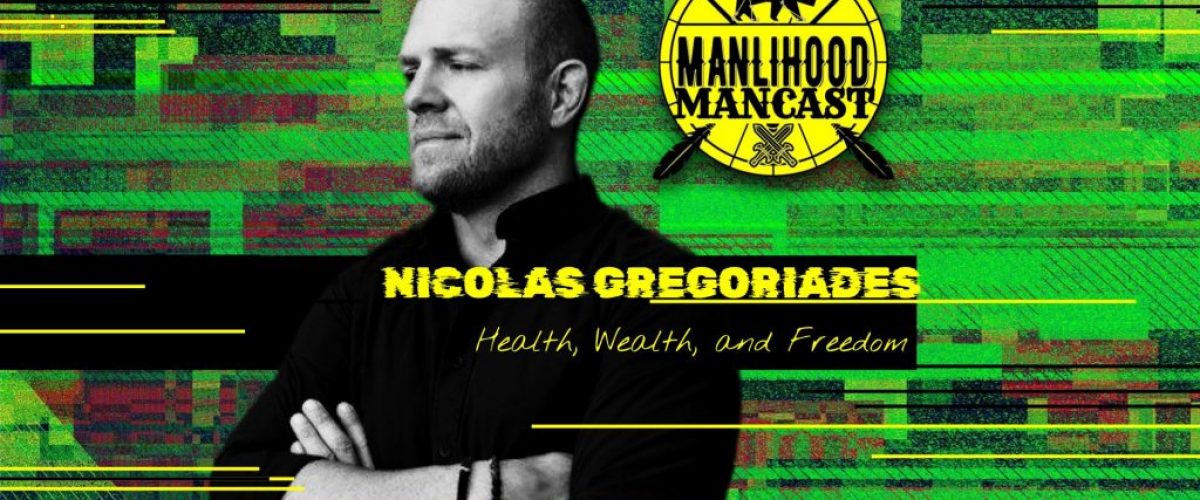
Today’s guest, Nicolas Gregoriades has appeared on several high-profile podcasts, including the Joe Rogan Experience and The Aubrey Marcus show. Nicolas Gregoriades is an internationally acclaimed jiu jitsu master, author and mentor.
Listen to Nic Gregoriades on the Manlihood ManCast on Spotify | Apple Podcasts | Youtube or wherever you listen to podcasts!
Nic Gregoriades has grappled with both failure and success.
He is also an accomplished podcast host having interviewed guests such as Tim Ferris, Dorian Yates and Graham Hancock
His experiences in life, the good and the painful are helping to inform him
His mission is to help men face their fears, embrace their power and lead lives of extraordinary fulfillment.
His latest book, Aligned: The Modern Man’s Guide to Health, Wealth & Freedom features 20 essential principles for success which Nic has formulated from his extensive experience with martial arts, psychedelic journeys and international adventuring.
Born in South Africa
Born and raised in Cape Town, South Africa, during the turbulent collapse of apartheid, Nic Gregoriades recognized at a young age that there was more to life than promised by the backward, small ideas of his country’s culture.
It was this which first sparked his hunger for wider knowledge and understanding, of
people, places, viewpoints, modes of living, and himself. And since then, with decades
of introspection, study, travel, and practice, and armed with the understanding that the
human experience is a gift, Nic has consistently been able to fulfill his potential.
He has dedicated himself and his life to discovering the secrets of a well-Iived life and
then sharing them with men who seek to go beyond the frustration, boredom and
At Manlihood, we’re curating chunks of manly wisdom for you. If you’re like a lot of men, you may find yourself short on time for reading long books to look for wisdom that you can apply to your life…. We’re offering you the Campbell’s Soup version… the best quotes and insights to help inspire you to be an even better man.
Listen to this episode of the Manlihood ManCast on Spotify | Apple Podcasts | Youtube or wherever you listen to podcasts.
“Every man has his secret sorrows which the world knows not; and often times we call a man cold when he is only sad.” ― Henry Wadsworth Longfellow
“I found that with depression, one of the most important things you can realize is that you’re not alone. You’re not the first to go through it, you’re not gonna be the last to go through it,” — Dwayne “The Rock” Johnson
“Anything that’s human is mentionable, and anything that is mentionable can be more manageable. When we can talk about our feelings, they become less overwhelming, less upsetting, and less scary.”
— Fred Rogers
“We’re all human. People are often afraid to admit difficulties, but I don’t believe that there should be a struggle with anything that’s the truth. If you were a guy, you used to have to be really masculine, but now expressing emotion is accepted and respected.”
– Zayn Malik
“There is hope, even when your brain tells you there isn’t.” ― John Green
“If we start being honest about our pain, our anger, and our shortcomings instead of pretending they don’t exist, then maybe we’ll leave the world a better place than we found it.”
– Russell Wilson
“Mental health problems don’t define who you are. They are something you experience. You walk in the rain and you feel the rain, but, importantly, YOU ARE NOT THE RAIN.” — Matt Haig
“My dark days made me stronger. Or maybe I already was strong, and they made me prove it.” –Emery Lord
“But no matter how much evil I see, I think it’s important for everyone to understand that there is much more light than darkness.” ― Robert Uttaro
“Be patient and tough; some day this pain will be useful to you.” — Ovid
“There is a crack in everything, that’s how the light gets in” ― Leonard Cohen
“Not until we are lost do we begin to understand ourselves” ― Henry David Thoreau
“Sometimes you climb out of bed in the morning and you think, I’m not going to make it, but you laugh inside — remembering all the times you’ve felt that way.” — Charles Bukowski
“Promise me you’ll always remember — you’re braver than you believe, and stronger than you seem, and smarter than you think.” — A.A. Milne via Christopher Robin from Winnie the Pooh
“In the middle of winter I at last discovered that there was in me an invincible summer.” — Albert Camus
“If you’re going through hell, keep going.” — Winston Churchill
“Change what you can, manage what you can’t.” ― Raymond McCauley
“If you have been brutally broken but still have the courage to be gentle to other living beings, then you’re a badass with a heart of an angel.” — Keanu Reeves
“There isn’t anybody out there who doesn’t have a mental health issue, whether it’s depression, anxiety, or how to cope with relationships. Having OCD is not an embarrassment anymore – for me. Just know that there is help and your life could be better if you go out and seek the help.” — Howie Mandel
“Being able to be your true self is one of the strongest components of good mental health.” — Dr. Lauren Fogel Mersy
“In any given moment, we have two options: to step forward into growth or to step back into safety.” — Abraham Maslow
“You don’t need to find a lesson in your trauma.” — Jordan Pickell, MCP RCC
“Two things can be true. You can love your family and have deep wounds as a result of your family experiences.” — Nedra Glover Tawwab
“Your illness is not your identity. Your chemistry is not your character.” — Rick Warren