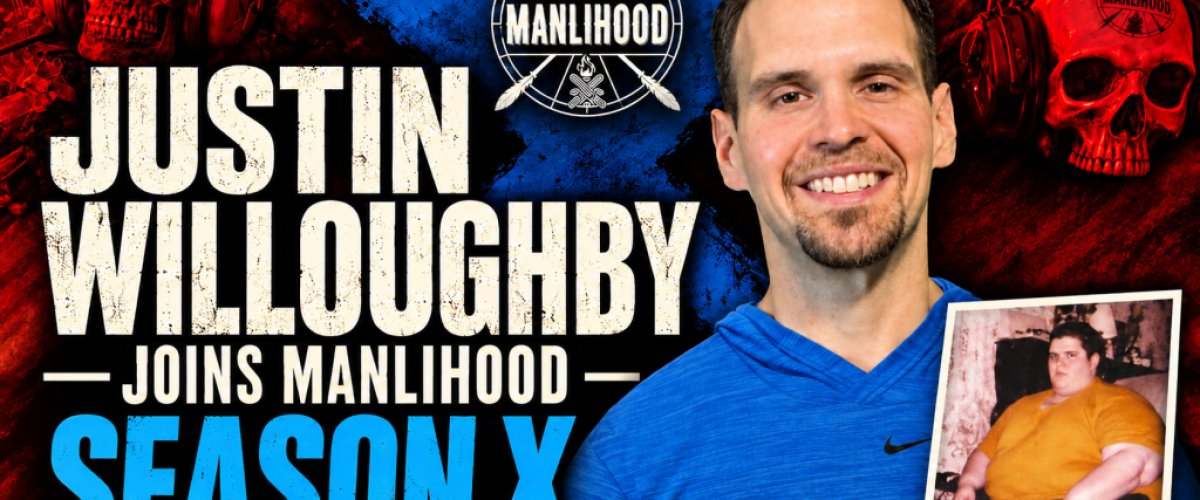
The first time I saw Justin Willoughby, he was pushing a shopping cart through Walmart with an oxygen tank. He had a Snickers bar in his hand. And here I was, a guy who knew absolutely nothing about this kid, forming an opinion about what he ought to be eating.
Turns out Justin had spent hours walking those aisles for exercise. He’d already lost almost 200 pounds by the time I saw him. I caught about ten seconds of his day and figured I knew something. We met again at church, and that kid became one of my best friends. I’m glad he got to know me well enough to give me crap for that story.
Justin Willoughby is joining Manlihood as a regular contributor for Season X. He’ll be talking with us about health, fitness, and nutrition. And the first thing I want him to tackle is a question I’ve got a personal interest in: How do you start working out when you’re really out of shape?
I’ve seen some of those “beginner” workouts. Fellas, when getting down on the floor is a project and getting back up requires a plan, you’d like to have a word with whoever decided where beginners begin.
That’s one of the reasons I want Justin here. At sixteen, he weighed 799 pounds. His first workout was one step. The next day he took two. Over the next several years, he lost 600 pounds. When you tell Justin where you’re starting from, you’re talking to a guy who remembers exactly what that first step cost him.
Some of you have heard Justin on the podcast before. If you’re getting to know him for the first time, I’d start with these two conversations:
600 Pound Weight Loss and Surviving Divorce — Justin and I get into divorce, forgiveness, remarriage, and what it looks like when a friend loves you enough to ask how you’re really doing.
Justin also coaches people who are working through their own struggles with weight and emotional eating. If that hits close to home, you can learn more about working with him at 600 Pounds Down.
Manlihood Season X launches Tuesday, November 24. Between now and then, I’d love to hear from you guys in the Manlihood ManCave. If you had Justin across the table and could ask him one honest question about getting healthier, what would you ask? I’ve already called dibs on the beginner workout question.
Welcome aboard, brother. I’m glad we get to do this together.
You know that feeling when something small starts bothering you, but you figure it’ll just go away on its own? Maybe it’s a weird pain that comes and goes, or feeling more anxious than usual, or even noticing you’re drinking a bit more than you used to. Most people think waiting it out is the smart move. The truth is, getting help early completely changes how your story unfolds, and the reasons why might surprise you.
Your Brain Works Against You When You Wait
Here’s something that sounds backwards but makes total sense once you understand it: the longer you wait to address a health problem, the harder your brain makes it to recognize you even have one. It’s not that you’re being stubborn or difficult. Your brain literally adapts to whatever becomes normal for you.
Think about it this way. When you first started wearing shoes that were too tight, you noticed every step. After a few weeks, you barely think about the discomfort because your brain decided this is just how walking feels now. The same thing happens with mental health issues, substance use, or chronic pain. What started as “this isn’t normal” becomes “this is just how I am.”
When people seek Legacy Healing addiction treatment or other professional support early on, they’re working with a brain that still remembers what normal felt like. That memory makes everything about recovery easier because you’re not fighting years of your mind telling you that struggling is just your baseline.
The Snowball Effect Works Both Ways
Every health problem starts small, but problems have this annoying habit of creating more problems. Someone who’s dealing with chronic pain might start having trouble sleeping. Poor sleep leads to mood changes. Mood changes affect relationships. Relationship stress makes the original pain feel worse. Before you know it, one issue has turned into five different problems that all feed into each other.
But here’s the good news: early intervention works the same way, just in reverse. When you address something early, you prevent that whole cascade from starting. You’re dealing with one problem instead of a web of connected issues. It’s like stopping a small leak in your roof instead of waiting until you need to replace the whole ceiling.
Your Support System Stays Intact
This one is huge, but people don’t usually think about it until it’s too late. When you get help early, the people in your life are still on your side. They haven’t been worn down by years of worry, broken promises, or watching you struggle. Your relationships still have trust and energy to spare.
Family and friends who might become exhausted or frustrated after years of watching someone struggle are usually eager to help when someone reaches out early. They haven’t built up resentment or protective walls yet. This means you get to heal with a strong support network instead of having to rebuild relationships at the same time you’re working on yourself.
Your Body Bounces Back Faster
The human body is amazing at healing itself, but it needs time and the right conditions. When you address health issues early, whether they’re physical, mental, or related to substance use, you’re working with a body that hasn’t been through years of stress and damage.
Someone who gets treatment for anxiety before it becomes panic attacks hasn’t spent years flooding their system with stress hormones. A person who addresses drinking concerns before developing dependence hasn’t put their liver and brain through years of strain. Early intervention means your body is still in good shape to support your recovery, rather than having to heal from extended damage first.
The Treatment Itself Is Different
Here’s something most people don’t realize: early intervention often means gentler, less intensive treatment. When problems are caught early, outpatient therapy might be enough instead of needing residential care. Medication doses can be lower. The whole process tends to be less disruptive to your normal life.
When someone waits years to address an issue, they often need more intensive intervention just to get stable enough to start the real work of healing. It’s like the difference between treating a small infection with antibiotics at home versus needing surgery in the hospital. Both approaches work, but one is obviously easier on everyone involved.
You Keep More Options Open
Early intervention preserves choices. Someone who addresses work stress before burning out completely might be able to solve the problem with better boundaries or a different role at the same company. Wait until you’re having panic attacks in meetings, and suddenly your options are much more limited.
The same principle applies to every health issue. Early treatment usually offers more pathways to wellness, while waiting often narrows your choices down to the most intensive options available.
Moving Forward Becomes Easier
The most important reason early help changes everything is that it makes the future feel possible instead of scary. When you address problems while they’re still manageable, healing feels hopeful rather than desperate. You’re choosing to get better instead of being forced to by crisis.
This mindset difference affects everything about recovery. People who get help early tend to stay engaged with treatment longer, follow through with recommendations more consistently, and maintain their progress better over time. They’re investing in their future instead of scrambling to save their present.
Getting help early isn’t about being weak or overreacting. It’s about being smart enough to fix small problems before they become big ones. Your future self will thank you for taking action today, even if today’s problems don’t feel that serious yet.
Your neighbor’s yard always looks perfect while yours seems to need constant work. What’s the difference? They probably have the right tools sitting in their garage. Good yard tools don’t just make work easier—they make jobs possible that you’d normally pay someone else to do.
Why Some Tools Matter More Than Others
Not every yard tool deserves space in your shed. The ones worth buying handle multiple jobs, last for years without breaking down, and actually save you money over time. These aren’t the gadgets you see on late-night TV that promise miracles. They’re the dependable workhorses that turn weekend yard work from a nightmare into something you might actually enjoy.
Heavy Cutting Power Changes Everything
When a branch crashes down after a storm or that old maple starts dropping limbs near your house, you need serious cutting power. Having a quality chainsaw means handling tree problems yourself instead of waiting days for a service call that costs hundreds of dollars. Today’s battery models cut through wood just as well as gas versions but won’t wake up the whole neighborhood or leave you smelling fumes for hours.
Tree maintenance isn’t just about emergencies either. Dead branches attract insects and diseases. Low-hanging limbs make it impossible to mow underneath them properly. Overgrown areas become hiding spots for weeds and pests. When you can handle these problems as they come up, your whole yard stays healthier.
Lawn Mowers That Actually Work
Every homeowner needs a mower that starts when you pull the cord and cuts evenly without leaving strips of tall grass. Gas mowers have raw power but need regular tune-ups. Electric mowers start every time but limit how far you can go. Battery mowers split the difference—reliable starting with freedom to roam anywhere.
The secret to a great-looking lawn isn’t expensive fertilizer or professional treatments. It’s cutting regularly at the right height. Most people cut too short thinking it means less work, but short grass gets stressed and lets weeds move in. Keep it slightly longer and you’ll have fewer problems overall.
String Trimmers Handle the Details
Mowers can’t get everywhere. Around fence posts, next to flower beds, under deck railings—these spots need a string trimmer to look right. Without one, your lawn always has those messy edges that make everything look half-finished.
Good string trimmers aren’t complicated machines. They need enough power to cut through thick weeds, controls that don’t wear out your hands, and line that feeds smoothly without constant stops to untangle jams. Battery models work great for most yards and eliminate the hassle of mixing gas and oil.
Clean Edges Make All the Difference
Walk through any nice neighborhood and you’ll notice the properties that look professionally maintained all have one thing in common—sharp, clean edges where the grass meets sidewalks and driveways. An edger creates these crisp lines and prevents grass from creeping onto concrete.
You don’t need a separate edger if your string trimmer can flip vertically, but dedicated edgers do the job faster and more consistently. Either way, spending a few minutes on edges transforms how your whole property looks.
Dealing with Leaves Without Going Crazy
Raking leaves by hand is misery, especially when you have large trees. Leaf blowers move piles of leaves in minutes instead of hours. You can clear leaves from under bushes, blow them out of flower beds, and gather them in open areas for easy collection.
Battery leaf blowers have gotten powerful enough to handle serious jobs while staying quiet enough to use without annoying everyone within three blocks. For smaller yards, they’re perfect. Bigger properties might need the extra power of gas blowers, but the noise and weight make them harder to use regularly.
Keep Shrubs and Hedges Under Control
Hedge trimmers prevent shrubs from taking over your landscape. Once bushes get too big, cutting them back looks terrible and can damage the plants. Regular trimming keeps them the right size and encourages thick, healthy growth.
Electric hedge trimmers work great if you don’t mind dragging an extension cord around. Battery models cost more but let you work anywhere without planning your route around electrical outlets. Either way, sharp blades and comfortable grips matter more than fancy features you’ll never use.
Pressure Washers Clean What Nothing Else Can
Some dirt won’t come off with a garden hose. Driveways get oil stains, sidewalks turn green with algae, decks collect grime that scrubbing can’t remove. A pressure washer blasts away years of buildup and makes surfaces look new again.
Electric pressure washers handle most homeowner jobs and cost less than gas models. They’re quieter, lighter, and don’t need engine maintenance. Gas pressure washers have more power for tough jobs but come with all the headaches of small engines—hard starting, regular tune-ups, and fuel mixing.
The Multi-Tool That Surprises Everyone
Oscillating multi-tools look small and harmless but handle an amazing variety of jobs. They cut through nails hidden in old decking, trim door frames after installing new flooring, remove old caulk, and sand in tight corners where nothing else fits.
For yard work, they’re perfect for pruning in tight spaces, cutting roots, and handling detail work around landscaping. The blade selection seems endless—cutting metal, wood, plastic, and even ceramic tile. Once you own one, you’ll find excuses to use it.
Building Your Arsenal Smart
Don’t try to buy everything at once. Start with a good mower and string trimmer since you’ll use them most often. Add tools as you need them for specific jobs. Buy quality equipment that will last instead of cheap tools that break after one season.
Battery compatibility matters more than most people realize. Sticking with one brand means your batteries work in multiple tools, saving money and storage space. You’ll also get familiar with one company’s controls and features instead of learning different systems.
The right tools turn yard work from a dreaded chore into something you can actually accomplish and feel good about. Your property starts looking better, your weekends become more productive, and you stop depending on other people to handle basic maintenance. That’s what makes a real yard hero.
The right tool for the job. It’s a concept that men understand well. Today’s guest talks about the RIGHT TOOLS for Fatherhood.
https://youtu.be/QOzsYN9JjrI
Kent Evans of Manhood Journey
Welcome to the Manlihood ManCast, I’m excited to introduce our guest today, Kent Evans. Kent is the Executive Director and co-founder of Manhood Journey, a ministry that helps dads become disciple-makers. Kent understands what it takes to be a dad, with 27 years of marriage to his wife April and raising 5 sons and one daughter-in-law.
After a successful 20-year career as a business leader, Kent embarked on biblical Fatherhood ministry projects. He’s been featured on various media platforms including television, radio, web outlets, and podcasts. Kent has spoken at parenting and men’s events and is also an author of three books.
Books by Kent Evans
Kent’s first book, Wise Guys: Unlocking Hidden Wisdom from the Men Around You, provides guidance for men to find mentors and wise counsel. His second book, The Manhood Journey: Charting a Course to Biblical Fatherhood, focuses on helping dads not only be good or great fathers, but godly ones.
In his newest book, Bring Your Hammer: 28 Tools Dads Can Grab From the Book of Nehemiah, Kent provides key tips to help dads become more godly fathers. I’m excited to have Kent on the show today to discuss his journey, his work with Manhood Journey, and his latest book. Welcome, Kent!
Listen to the Manlihood ManCast interview with #1 Best Selling author Brad Thor on Spotify | Apple Podcasts
Brad Thor is a #1 New York Times bestselling author with his series of international thrillers. Brad has written 21 thrillers including including BLACK ICE (ThrillerFix Best Thriller of the Year), NEAR DARK (one of Suspense Magazine’s Best Books of the Year), BACKLASH (nominated for the Barry Award for Best Thriller of the Year), SPYMASTER (“One of the all-time best thriller novels” —The Washington Times), THE LAST PATRIOT (nominated Best Thriller of the Year by the International Thriller Writers Association), and BLOWBACK (one of the “Top 100 Killer Thrillers of All Time” —NPR).
Media Contributor
Brad’s work studying international terrorists, and the american intelligence agents who hunt them down has not only informed his novels, but landed him numerous appearances on major news networks including BC, CBS, NBC, PBS, FOX News Channel, FOX Business Channel, CNN, CNN Headline News, The Blaze, and MSNBC.
Brad Thor is more than just a writer
In 2008, Brad went along with a black ops team in Afghanistan, and he served as a part of the Homeland Security Red Cell program to help brainstorm defenses to terroristic threats.
In this interview, Josh Hatcher tells the story of how Brad Thor gave Manlihood a big head start, and asks him about his book, his life experiences, and what it means to be a man.
In this podcast episode for men, Josh Hatcher of Manlihood.com breaks down the answer for happiness for men.
Happiness isn’t the point of life. Don’t make it your most important pursuit. We’ll talk more about that in a bit.
Perspective
If men want happiness, it starts by realigning your perspective with a clearer picture of your situation. It’s often easy to see the bad things and lose focus. You’ve heard the old adage, “I always envied a pair of new shoes till I met a man with no feet.”
Gratitude
Gratitude is not just a reaction to happiness for men. It’s actually a catalyst. We often equate feelings with actions or choices. We may not feel grateful, but choosing to express gratitude unlocks the feelings we desperately need.
Discipline
We usually don’t think of discipline as happy – but the truth is – taking care of ourselves, eating right, getting exercise, sleeping well have a huge impact on how we feel. To be disciplined to put good content in our brains and reject the content that makes us feel bad also requires discipline.
Joy vs Happiness
Happiness is a feeling. Joy is a choice – a state of mind. It’s okay to want to be happy, but don’t let the feeling satisfy. Life will often bring times of sadness, anger, loneliness, or other feelings we think of as unhappy. We have to learn that to choose joy helps us overcome the despair that those other feelings can bring if left unchecked.
After dating for some time, throwing a reception, exchanging your vows and finally getting married, you think it’s going to last forever. Alas, marriage is a fragile and sometimes ephemeral thing. Every man has his forte, and dealing with a divorce might not be the one thing you’re particularly good at. You know that sometimes it’s rather difficult to deal with your feelings, and it gets unimaginably difficult when you add another person’s rollercoaster of emotions to the equation. However, there are a few things you should have in mind that could help you with accepting the whole process and going through it. Here they are.
The past is in the past
When you invest a lot of time and energy into your marriage, and it breaks at one point, it’s normal to start remembering all the wonderful moments you’ve been through together. Nevertheless, you can’t let yourself be stuck in the past, as it won’t help your current situation one tiny bit. You have to be bent on getting the best you can out of it. Think about moving to a place you’ve always wanted to live at, invest some more time into your hobbies, friends, travel someplace new, anything that will positively affect your well-being. It takes time to process everything and remember who you were before your marriage, so try to turn the situation in your favour.
Engage with your kids
If you have kids, you should be reminded that the whole divorce might be taking a heavier toll on them that it is on you. Men tend to be reserved when it comes to opening up and talking about emotions, but you should take a different approach in order to play your role as a father. If you act your part, spend time with them, stay calm and be honest about what’s going on, this exposure to divorce shouldn’t be as difficult as it normally can be. With the help of family lawyers in Sydney, your divorce can go smoothly, and this swift process helps the kids handle the whole situation better. That’s why you should be cooperative and reasonable, which will speed up the process and make it easier for everyone involved.
Be respectful until the end
We all keep some of our emotions under our hats, but there is a limit for a healthy amount of that. If you’ve been repressing a lot of them over many years, divorce might be a stimulus to let them all out. It’s certainly a natural reaction to be angry, bewildered, irritated, and annoyed, but you should be careful as to how you’re releasing those feelings out into the world. Don’t go belittling your spouse, calling her names, or calling her out for something she did. Also, try to keep her private life a secret and forget about revenge or anything of that sort. Mutual respect is a life-saver.
Don’t be afraid to ask for help
Along the way, many triggers are bound to pop up, and you have to learn to cope with them. Some places, people, or everyday things around you will remind you of your spouse and it could cause all of the previously-experienced emotions to surge out once again. If you feel that you’re not doing well at those instances, think about going to therapy or reading self-help books. As little as a friendly conversation with your dear ones can also go a long way into making you feel better. Things get better over time, but you have to be patient when everything gets dark and gloomy, as that’s an integral part of a divorce.
To conclude
Some things in life can’t be controlled or changed, and everything that’s left at those moments is to learn to accept and adapt to them. Try to slow down with rebounds and a hectic lifestyle that you might regret later, and make sure to slowly start establishing a new life. A post-divorce life is filled with numerous challenges, and the most important thing is to take care of your well-being and work on setting your new life on the right course.
Peter Minkoff is a lifestyle writer at Bond magazine. Follow Peter on Twitter for more tips.
In this episode of the Manlihood ManCast, Josh Hatcher talks about being RESOLUTE – making resolutions in the New Year that stick.
Make a Lifelong Resolution
Take some time this week to identify an area of your life that needs to change.
Your relationship with your spouse, your parenting skills, your work habits, launching a new career as a writer, becoming a more positive person – whatever it is that needs to change in your life.
Identify it.
And start meditating on what it means to change it permanently.
You don’t have to be stuck at a job you hate for the rest of your life. You don’t have to walk on eggshells because you are afraid your wife is going to leave you. You don’t have to be afraid about your kids making bad choices. You don’t have to be fat, or tired all of the time. All of those things can be fixed – but all of those things will require you to change. And change doesn’t happen overnight, and it doesn’t happen just because you say it will.
It starts with aligning your head and your heart with your destination, and it finishes when you fulfill your commitment. If you want to lose weight, you can lose it – but if you don’t commit to changes for the rest of your life you’re going to be in the same place you are now. You can resolve to be a better husband, but if you fall back into the same patterns of behavior, you’ll find yourself in the doghouse again.
It’s not just about changing behavior, it’s about changing your lifestyle.
That starts in your mind, and flows out from there – but change requires commitment, or you will always return to your old self by default.
Don’t be Swayed
Can you be defined as bold?
Can you be defined as steady?
When people see your life, do they see you as waffling, indecisive, and wavering?
In some ways it doesn’t matter what others think of you, and what their judgments are – but other times, your reputation is a good indicator of your character! Surround yourself with men who will challenge you and ask you the hard questions. Ask them if they see you as bold, steady, determined, resolute.
While we’re often talking about behavior changes, it’s important to note that bad behavior, overeating, mouthing off, addictions, etc. are the visible manifestations of an inner issue. You can try to change those things all you want, but these external problems stem from an internal one.
Resolving to change is not enough. You actually have to change. And that starts with changing the way you think.
I’ve found that I often need reminders to stay on track. A piece of jewelry, an item in my pocket, a post it note on my workstation or refridgerator that encourages me to stay the course can really give me a little push in in the right direction when I start to stray, or start to get weary of keeping my commitment.
Positive reinforcement is great, but sometimes you need a little negative reinforcement. Even something as simple as a rubber band, snapped against the wrist when my mind starts to want the thing that I shouldn’t have helps me associate that pleasure-able thing with pain, and while at first, many little red-skinned wrist snaps were uncomfortable, I find myself thinking less and less in the wrong direction.
In order to avoid being swayed from your path, you have to internalize the decision to change. You have to change the way you think. And that is really the hardest part.
What steps can you take to change your thinking?
Change your Mind
Remember those commercials for the NAACP that used to say, “A mind is a terrible thing to waste” ?
Those words have often haunted and sung in my head, because they highlight the value of the human mind. But they don’t even come close to describing the power of it.
I know that may sound like metaphysical mumbo-jumbo, but truth sometimes can sound a bit strange. Especially ancient truth.
The word “mindset” breaks down to imply that the mind is fixed like concrete or glue…. Hardened in the way that it thinks. And this perspective really helps us understand how to succeed and how to accomplish what it is we are meant to do. When we SET our mind on improving some area of our life – we will improve. Especially if we reinforce that concrete as often as we can with continual reminders of our destination.
What is a mindset? It’s simply what you think about, and how you think about it. Before we can talk about developing a healthy mindset, we need to talk about how you got your unhealthy mindset, and why it is unhealthy.
From the time you were born, you’ve heard lies about yourself and the world around you. If you hear a lie enough times, you start to believe that it’s true. If you tell yourself that you can’t lose weight – will you lose weight? If you tell yourself that you are worthless, will you ever find self-worth?
The first step in correcting your mindset involves the choice to identify and root out the lies about your situation. Identify the un-truth, call it like it is – and then move on to the next step, which is to identify the truth.
The truth is you CAN do it. The truth is you do have value.The truth is you ARE an addict in need of recovery. The truth is you have treated your wife like crap. The truth is you can change.
Identify the truth, good or bad, and then determine what changes need to be made in your lifestyle as you strive to chase that truth. If the truth is bad, focus on the corrective result that you want to see. “I’m an alcoholic, but I will kick this habit.” “I’m a crappy husband, but I will choose to be a better one.”
Cultivating that mindset means kicking out thoughts, daydreams, and internal dialogue if it goes against the positive direction that you want to go. Thoughts sometimes swirl around and get you off track, and it’s up to you to kick it out. How do you kick it out? It simply starts with telling it to go. Outloud if you have to. “Get out of my head. I am not stupid. I will pass this exam.”
You must also kick out the external voices that are holding you back. If your spouse is berating your attempts to improve, tell her that you need her support. If you are listening to music or watching television or movies that reinforce the bad habits or ideas, toss them out.
Changing your mind is not instant, nor is it simple. It take the discipline to “take captive every thought.” Whenever a thought comes into your head – take the time to evaluate it and file it appropriately. Is it positive, encouraging, true, motivating, brutally honest? Is it weak, passive, negative, destructive, dishonest?
You know which ones are good. Put the good ones in the right place – and kick the bad thoughts out.
Changing your mind also takes education. Read, attend seminars, classes, and groups to enrich and enlarge your mind. If you want to see change, you have to be properly equipped.
Replace Your Addictions with Habits
Probably the most common resolutions are “Quitting Smoking,” “Losing Weight,” or “Getting Healthy.” These resolutions, along with others, like getting sober, quitting drugs, and many others are in response to addictions.
Psychology Today defines addiction this way:
Addiction is a condition that results when a person ingests a substance (e.g., alcohol, cocaine, nicotine) or engages in an activity (e.g., gambling, sex, shopping) that can be pleasurable but the continued use/act of which becomes compulsive and interferes with ordinary life responsibilities, such as work, relationships, or health. Users may not be aware that their behavior is out of control and causing problems for themselves and others.
There are a number of different ways that we deal with addiction: We often trade one addiction for another. That’s why smokers who quit often gain weight…
There are so many facets to treating addiction, and getting to the root of the problem that we can’t get into here. I’m no expert, and even the experts have a variety of opinions on it. If you find yourself in need of more help, consult an expert.
In the meantime though, and especially in dealing with the smaller more manageable addictions – I can offer some advice.
Replace those addictions with good habits.
If you normally reach for a sugar soda to quench your thirst, replace it with ice water!
If you are addicted to caffeine, (by the way – the first three days of that addiction are the hardest!) Replace the need for a boost of energy with a quick burst of exercise or stretching! (My wife sells essential oils – I’ve found that a quick whiff of peppermint oil actually gives me almost the same boost of caffeine!)
Trying to quit smoking? If you are taking the smoke breaks out of your life, you have to replace them with something else that is GOOD for you.
Get together with your brothers-in-arms and talk about the addictions you need to cast off. Ask for advice, ask for accountability. Be honest with them about the struggles, and about the process. It may not be instant – sometimes screwing up is part of the process!
In this episode of the Manlihood ManCast, Josh Hatcher talks about a few different V Words that are important for men to understand. Some we need to embrace, some we need to reject.
Validation
We all want validation. We all want someone to give us that validation or respect. But ultimately, we have to give it to ourselves.
Vigilance
We have to be ever vigilant, we need to be aware of what’s going on around us. Vigilant against threats internal and external.
Vengeance
Vengeance is destructive. We need to avoid this. Justice is good. Reconciliation is good. Vengeance is destructive.
Victimhood
We’re living in a time where being a victim is almost revered.
Victory
We all want to win. We want to be victorious. It’s good for us to run the race to win it. It’s good to celebrate the wins.
Virtue
The virtuous life is a life that is guided by principle. We do the right thing. Don’t virtue signal. Just have virtue.